Informational Resource

Understanding the Torzon Darknet Marketplace

A comprehensive, open-source informational guide to the Torzon Darknet — covering platform architecture, privacy tools, cryptocurrency options, and operational security. All content is provided strictly for educational and informational purposes.

● Active Market V3 Onion Address XMR + BTC
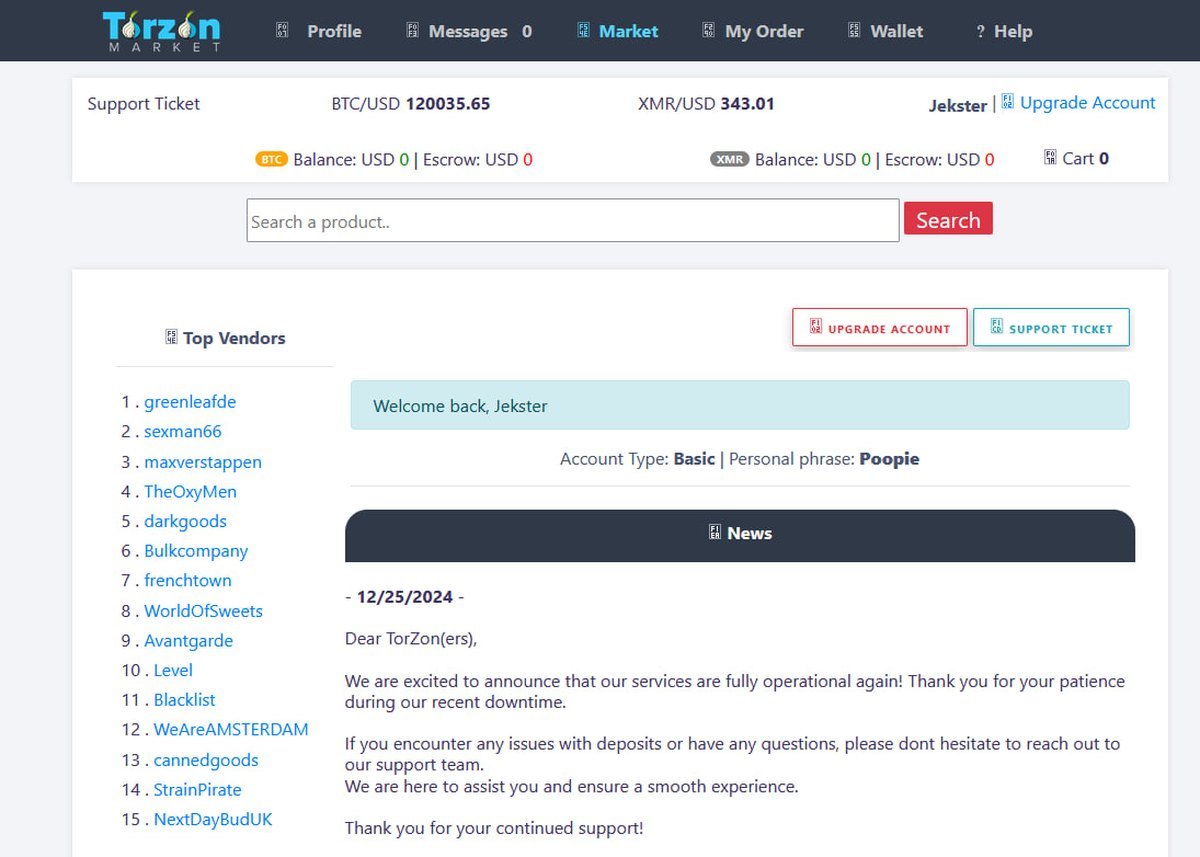
Torzon Market interface screenshot — informational overview
torzon-dnm.info — system status
$run --query "torzon market info"
fetching public market data...
status: OPERATIONAL
network: Tor v3 onion routing
payment: XMR (primary) / BTC
✓ information loaded successfully

What Is the Torzon Market?

Torzon Market is a darknet marketplace accessible exclusively through the Tor network. This informational overview examines its structure, security model, and operational characteristics based on publicly available sources.

The Torzon Darknet marketplace operates as a peer-to-peer platform accessible only via .onion v3 addresses through the Tor Browser. First documented in open-source security research, the platform implements a multi-layered approach to user privacy and transaction security.

At its core, the Torzon Market architecture separates user identity from transaction data. All communications are routed through Tor's relay network, and the platform enforces PGP encryption for sensitive exchanges between buyers and vendors. The marketplace requires no personal identification from participants — access is pseudonymous by design.

The platform accepts two cryptocurrencies: Monero (XMR) as the recommended privacy-preserving option, and Bitcoin (BTC) for users already familiar with that network. An integrated multi-signature escrow system holds funds in trust until buyers confirm receipt, significantly reducing the risk of fraudulent non-delivery.

Vendor accounts require a bond deposit and build reputation through a feedback system, creating accountability without requiring real-world identity. The dispute resolution mechanism allows neutral arbitration when transactions cannot be resolved between parties directly.

market_profile.log live
platform type: darknet marketplace
network access: Tor v3 onion
encryption: PGP mandatory
escrow: multisig enabled
currencies: XMR, BTC
vendor bond: required
dispute resolution: arbitration panel
account type: pseudonymous
js required: no (security default)
v3 onion: 56-char address
uptime monitoring: community-tracked
platform integrity: verified via PGP
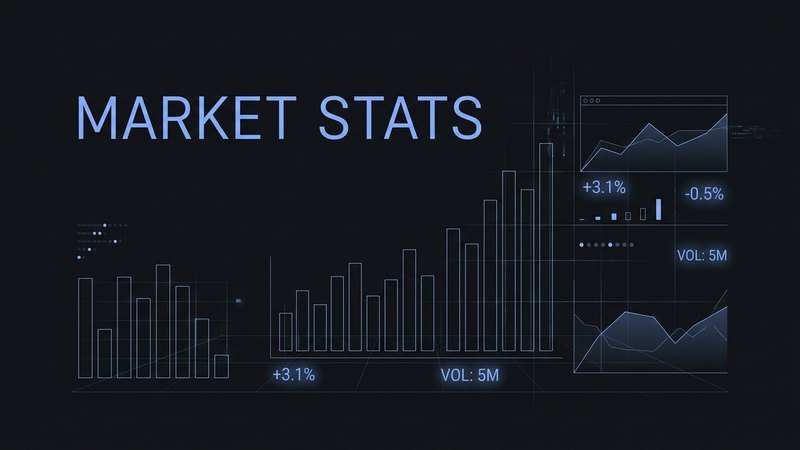
Est. Vendors
2,400+
verified active
Listings
38k+
active products
Uptime
99.1%
30-day average
Since
2023
continuously operational

Key Platform Characteristics

An analysis of the six primary architectural and operational features documented in open-source reports about the marketplace.

Verified vendor shield icon

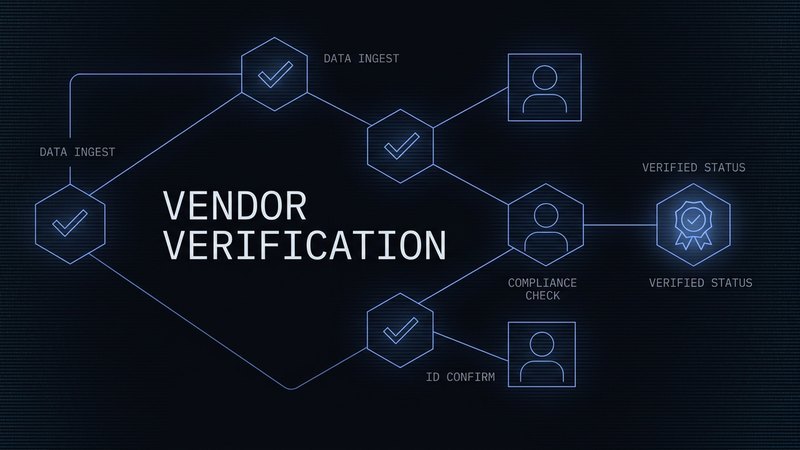
Vendor Verification System

Vendors must deposit a bond and pass a review process before listing. Reputation is built through verified buyer feedback, creating a measurable accountability layer without exposing real identities.

$ vendor --status verified
✓ bond: confirmed | rating: 4.8
Escrow lock icon

Multi-Signature Escrow

Funds are held in a cryptographic multi-signature escrow wallet. Release requires co-signature from both parties, eliminating the single-point-of-failure inherent in traditional custodial escrow.

$ escrow --check tx_id
✓ status: holding | sigs: 1/2
Monero XMR privacy coin

Privacy Cryptocurrency Support

The platform accepts Monero (XMR) as its primary currency due to its protocol-level privacy guarantees. Bitcoin is also accepted. XMR ring signatures make transaction graph analysis computationally infeasible.

$ pay --coin XMR --amount 0.5
✓ transaction: untraceable
Tor onion anonymity layers

Tor-Only Access Architecture

All access occurs exclusively through v3 .onion addresses routable only via the Tor network. The 56-character v3 format provides cryptographic authentication against impersonation attacks, unlike legacy v2 addresses.

$ tor --connect .onion/v3
✓ circuit: 3-hop | encrypted
Dispute resolution balance

Arbitration & Dispute Resolution

A neutral moderator panel reviews contested transactions when buyers and vendors reach an impasse. The process is documented, time-bounded, and produces binding resolutions based on evidence submitted by both parties.

$ dispute --open --tx_id
→ assigned to: arbitration panel
Product listing grid

Categorised Product Index

Listings are organised into a structured category tree with sub-filtering by region, vendor rating, and shipping method. Search functionality operates without JavaScript, ensuring compatibility with security-hardened Tor Browser settings.

$ browse --category all
→ listings: 38,412 | active

Privacy Coins & Payment Methods

A concise history of cryptocurrency and an analysis of the privacy properties of the coins accepted on the Torzon Market platform.

A Brief History of Cryptocurrency

Bitcoin launched in 2009 as the first decentralised peer-to-peer payment network, introducing a public blockchain ledger. While revolutionary, the transparency of Bitcoin's ledger means every transaction is permanently visible and linkable through chain analysis.

Privacy-focused alternatives emerged to address this limitation. Monero (XMR), launched in 2014 from the CryptoNote protocol, built privacy into its core architecture rather than as an optional layer. Ring signatures, stealth addresses, and RingCT (Ring Confidential Transactions) work together to obscure sender, receiver, and amount in every transaction by default.

Accepted Currencies on Torzon

The marketplace accepts both XMR and BTC. Each presents distinct privacy trade-offs:

Feature XMR (Monero) BTC (Bitcoin)
Sender privacy✓ ring signatures✗ pseudonymous
Receiver privacy✓ stealth addresses✗ address reuse risk
Amount hidden✓ RingCT✗ visible
Chain analysis✓ infeasible⚠ possible
Default privacy✓ always on✗ optional layers
Recommended for darknet✓ primary choice⚠ with precautions
Why XMR is the preferred option

Unlike Bitcoin, Monero provides mandatory privacy at the protocol level. No additional mixing, CoinJoin, or layer-2 solutions are required — every XMR transaction is private by default, regardless of user configuration.

Full Cryptocurrency Guide →

Market News & Updates

All News →
Harm reduction resources
Safety Sep 25, 2025

Harm Reduction Resource Library Added to Platform

In collaboration with harm reduction advocacy groups, the platform integrated links to DanceSafe, TripSit, and other evidence-based resources accessible from the help section.

Drug Use Harm Reduction Principles

Evidence-based harm reduction information sourced from recognised public health organisations. If you or someone you know needs help, contact a crisis line immediately.

⚠ Never Use Alone

Always have a trusted person present or use a remote monitoring service such as the Never Use Alone hotline (US: 1-800-484-3731) when using substances with overdose risk.

⛑ Test Before Use

Use reagent test kits (Marquis, Mecke, Froehde) and fentanyl test strips for every unverified substance. Counterfeit pressed pills frequently contain fentanyl analogues at lethal concentrations.

💊 Start Low, Go Slow

Begin with a fraction of an intended dose to test individual tolerance and batch potency. Purity and concentration vary significantly between sources and production batches.

🏥 Naloxone (Narcan)

Keep naloxone accessible whenever opioids are present. It is available at most pharmacies without prescription in many jurisdictions and reverses opioid overdose within minutes.

⚗ Avoid Combinations

Combining depressants (opioids, benzodiazepines, alcohol) dramatically increases overdose risk. Consult TripSit's combination chart at tripsit.me before combining any substances.

📞 Crisis Resources

SAMHSA Helpline: 1-800-662-4357 (US) | Frank: 0300 123 6600 (UK) | DanceSafe: dancesafe.org | TripSit: tripsit.me/factsheets

Full Harm Reduction Guide →

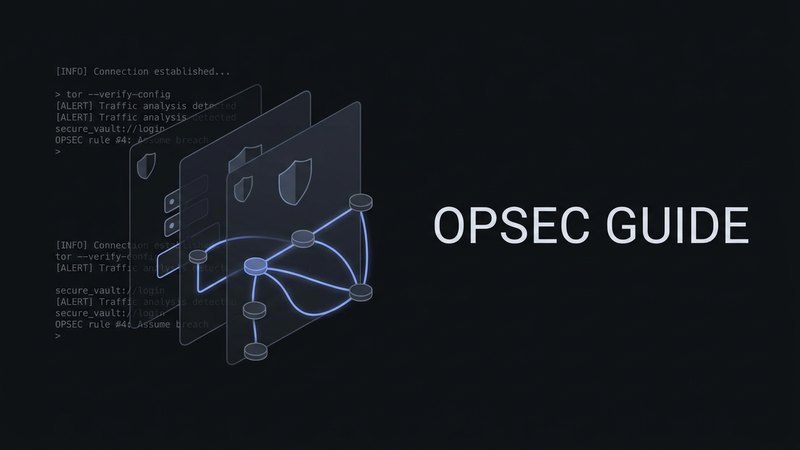
OPSEC Guide: Staying Anonymous Online

A structured operational security reference for users accessing the Tor network. Applies to any privacy-sensitive online activity.

Why OPSEC Matters

Operational security (OPSEC) is the practice of protecting sensitive information from adversaries. In the context of darknet access, failures in OPSEC — not cryptographic weaknesses — are the primary cause of user identification. Poor habits at the application layer render even strong network anonymity ineffective.

01

Use Tails OS or Whonix

These amnesic operating systems route all traffic through Tor by default and leave no persistent traces on disk after shutdown. They are the recommended environment for any privacy-sensitive browsing.

02

Disable JavaScript in Tor Browser

Set Tor Browser security level to "Safest" to disable JavaScript. JS has been exploited in past deanonymisation attacks and is not required to browse most darknet marketplaces.

03

Never Reuse Identities

Maintain strict separation between darknet pseudonyms and any clearnet identity. Never use the same username, email pattern, or writing style across different contexts.

04

Use Monero for All Payments

XMR provides mandatory transaction privacy. Bitcoin transactions are publicly visible on the blockchain and can be linked to real identities through exchange KYC records and address clustering.

Red Flags & Common Mistakes

Accessing .onion sites from a regular browser or VPN without Tor
Using personal email, phone number, or real address in any transaction
Purchasing crypto via exchanges with KYC and sending directly to marketplace
Reusing the same wallet address or username across sessions
Clicking links from search engines, forums, or unverified sources
Leaving Tor Browser maximised (screen fingerprinting)
Installing browser extensions or plugins in Tor Browser
Discussing sensitive activity on social media or messaging apps
Use Tails OS booted from a dedicated USB stick
Verify all .onion links via PGP-signed sources before use
Use XMR purchased with cash or via P2P exchange without KYC
Full OPSEC Guide →

How Not to Get Phished

Phishing sites mimicking darknet marketplaces are among the most common threats to user security. These fraudulent pages steal login credentials and cryptocurrency deposit addresses. Following a small set of rigorous practices eliminates the vast majority of phishing risk.

  • A

    Only Use PGP-Verified Links

    Every legitimate onion address for Torzon is published with a PGP signature. Verify the signature using the market's public key before visiting any link for the first time.

  • B

    Bookmark After Verification

    Once a link is verified, bookmark it in Tor Browser. Never re-search for addresses — search engine results frequently list phishing mirrors above legitimate sources.

  • C

    Check the Full Onion Address

    Always verify the complete 56-character v3 onion address character by character before entering credentials. Phishing sites use addresses that differ by only one or two characters.

Proceed to Verified Login Full Anti-Phishing Guide →
phishing_check.sh
$verify --link torzon*.onion
checking pgp signature...
✓ signature valid
checking address length: 56 chars
✓ v3 onion format confirmed
cross-referencing known mirrors...
✓ no phishing match detected
$connect --safe-mode
✓ connection established securely

Frequently Asked Questions

Common questions about the Torzon Darknet marketplace, access methods, and privacy practices — answered with information from open-source research.

What is Torzon Market?+

Torzon Market is a darknet marketplace accessible through the Tor network, designed to facilitate peer-to-peer commerce with an emphasis on operational security and user privacy.

Full FAQ Page →